

TL;DR
A hydraulic piston pump exported to the EU, installed on a Chinese-flagged vessel, or running in a high-purity industrial cell has to clear three different compliance gates at once: CE marking under the EU Machinery Regulation 2023/1230 for the European Economic Area, ISO 4406 fluid cleanliness codes for any installation where oil cleanliness is contractual, and China Classification Society (CCS) type approval for marine and offshore applications where the pump sits inside a classed system. These three marks are not interchangeable: CE is a self-declared legal route to the EU single market, ISO 4406 is a contractual fluid cleanliness code (not a certificate of the pump itself), and CCS type approval is a third-party verification of the pump design for marine duty. Vicks Hydraulic (Ningbo) supports all three with the documentation, the test reports, and the laboratory evidence buyers ask for at RFQ stage, anchored in the piston pump product range catalogued at vickshyd.com/piston-pump/ and the cert set listed on vickshyd.com/certificate/.
The rest of this guide walks through each mark in turn, then explains how they interact on a single RFQ, then closes with a buyer-side compliance checklist and nine procurement FAQs.
CE Marking for Hydraulic Pumps Under the EU Machinery Regulation 2023/1230
CE marking is the legal passport for a hydraulic pump entering the EU single market. From 20 January 2027 the new EU Machinery Regulation 2023/1230 replaces the legacy Machinery Directive 2006/42/EC. Until that date, both routes are valid for placing new pumps on the EEA market, and the legacy directive remains the reference for products already in service. The CE mark is not a quality mark awarded by a third party; it is a manufacturer self-declaration supported by a technical file, a risk assessment, and the relevant harmonised standards.
For a hydraulic piston pump the CE technical file typically draws on four harmonised standards. EN ISO 4413 covers hydraulic fluid power general rules, EN ISO 4414 covers hydraulic fluid power actuators, EN 60204-1 covers the electrical equipment of machines, and where the pump is sold as part of a system with electronic controls, the EMC Directive 2014/30/EU and Low Voltage Directive 2014/35/EU layers apply. The reference framework for buyers is the European Commission CE marking portal, which sets out the conformity assessment routes and the role of notified bodies for higher-risk machinery. Background context on the Machinery Directive evolution and the new Regulation is summarised on the Wikipedia Machinery Directive entry and the Wikipedia CE marking entry, both useful for engineers onboarding to CE for the first time.
A buyer-side check: ask for the Declaration of Conformity (DoC) naming each applied harmonised standard with its year of publication, the technical file index, and where the pump is variable-displacement, the noise-test report per EN ISO 4413. The piston pump catalogued at Rexroth LA10V31 series is one example where the variable-displacement swash-plate design drives specific CE evidence: cradle-bearing hydrostatic unloading data, the high-pressure measurement sensor port description, and the universal through-drive compatibility statement all belong in the technical file because they directly affect the risk assessment under Annex I of the Machinery Regulation.
ISO 4406 Fluid Cleanliness Codes and What They Mean for Hydraulic Pumps
ISO 4406 is the most-misunderstood compliance mark on a hydraulic pump datasheet. It is not a certificate of the pump design, and it is not a quality mark from ISO. It is a coding system that classifies the particulate contamination level of a fluid sample taken from a working hydraulic system. The standard assigns three numbers — for example 18/16/13 — corresponding to particle counts per millilitre above 4 micron, 6 micron, and 14 micron size thresholds. The codes come from ISO 4406:2021 (the current edition) and the broader ISO 4406 family for solid contaminant quantification, supported by ISO 18421 for cleanliness of parts and components. The underlying particle-counter calibration standard is ISO 11171, which sets the calibration fluid for the automatic counters most labs use today, and the parallel SAE standard used by some North American labs is SAE J1739. Industry-side reference for cleanliness contract clauses comes from the Hydraulic Institute standards library and the National Fluid Power Association resource pages.
The procurement relevance is that many industrial end-users, especially in plastics machinery, machine tools, and offshore hydraulics, write the cleanliness code into the pump purchase contract. A buyer specifying 18/16/13 is stating that they will hold the fluid supplier to that envelope, and they expect the pump supplier to confirm the pump ships below a stated cleanliness level (typically 20/18/15 or better for new pumps from the factory). Vicks Hydraulic documents this on the piston pump product pages, where the A10VSO31 and A10VSO32 range carries the factory cleanliness statement buyers cross-reference against ISO 4406 codes.
The table below maps the most common cleanliness codes a buyer will see on a hydraulic RFQ, what each code means in particles per millilitre, and where each code typically appears in service.
| ISO 4406 code (≥4 µm / ≥6 µm / ≥14 µm) | Approx particles >4 µm per mL | Typical service environment |
|---|---|---|
| 22/21/18 | 20,000 to 40,000 | Low-duty industrial, mobile machinery with coarse filtration |
| 20/18/15 | 5,000 to 10,000 | General industrial hydraulics, machine tools |
| 18/16/13 | 1,300 to 2,500 | Servo and proportional systems, plastics injection moulding |
| 16/14/11 | 320 to 640 | High-response servo, aerospace ground support |
| 15/13/10 | 160 to 330 | Hydraulic systems with on-line filtration to 3 µm absolute |
Buyer-side check: when a cleanliness code is written into the RFQ, ask for the factory cleanliness report measured per ISO 4406:2021 or the older ISO 4406:1999 if the buyer is still on legacy specs, and confirm whether the code applies to the as-shipped fluid or to the system after 100 hours of break-in. Vicks Hydraulic publishes its fluid cleanliness guidance for long-service industrial systems, which covers the break-in vs steady-state distinction.
CCS Type Approval for Hydraulic Pumps on Classed Vessels and Offshore Units
The China Classification Society is the third mark that frequently shows up alongside CE and ISO 4406 in export RFQs. CCS type approval is a third-party design verification: a CCS surveyor audits the manufacturer's quality system, witnesses the prototype tests, and issues a type approval certificate that allows the pump to be installed on CCS-classed vessels, offshore platforms, and certain land-based marine equipment without project-by-project survey. The scope and process are documented on the CCS English-language portal and the Wikipedia entry on China Classification Society. For vessels classed by other major societies, the parallel marks are ABS type approval, DNV type approval, Lloyd's Register type approval, and Bureau Veritas marine. Independent third-party testing bodies that buyers reference for CE technical-file audit include SGS CE marking services, and pump-design reference points for the piston pump variant engineering come from the Hydraulic Institute standards library.
For a hydraulic piston pump on a classed vessel, the CCS type approval scope typically covers the pump body, shaft seal, bearing arrangement, and the rated pressure/temperature envelope. It does NOT cover the cleanliness of the oil in service — that remains an ISO 4406 contract issue between the shipyard and the system integrator. The CCS certificate travels with the pump and is referenced in the ship's classification file.
Vicks Hydraulic's piston pump range includes CCS-relevant models in the A4VSO, A10VSO31, and A10VO52/53 families, and the marine machinery application context is documented on the marine machinery application page. Buyers specifying CCS type approval should request the certificate number and the test report summary, and should confirm that the rated envelope on the certificate matches the duty cycle on the RFQ.
Buyer-side check: confirm the CCS certificate is current (certificates have a five-year validity under typical society rules), confirm the rated pressure and speed on the certificate covers the RFQ operating point, and ask for the QA audit schedule so the buyer can plan re-audit windows.
How CE, ISO 4406 and CCS Overlap — and Where They Don't
The three marks answer three different questions. CE answers: is this pump legally allowed on the EEA market? ISO 4406 answers: how clean is the oil in the system at the time of sampling? CCS answers: is this pump design verified by a marine classification society for shipboard service?
The marks do not always need to appear together. A pump going into a plastic injection moulding machine in Guangzhou does not need CCS, but the same pump going onto a Chinese-flagged offshore supply vessel does. A pump going into a German plastics factory does not need CE if it is part of a CE-marked machine the European importer is integrating, but the same pump supplied as a standalone service-spare to a German end-user does. The flowchart in practice is short: confirm the destination market, confirm the installation context (component of a larger CE-marked machine vs standalone placing on the market), and confirm whether the installation has a marine, oil-and-gas, or industrial cleanliness contract.
Two common misconceptions surface on RFQs. The first is that an ISO 9001 quality management certificate is interchangeable with CE — it is not. ISO 9001 (ISO 9001:2015, ISO 9000 family overview) certifies the manufacturer's process discipline, while CE is a per-product legal route. The second is that CCS type approval alone is sufficient for the EU — it is not. CCS is recognised by the marine market and some offshore buyers but is not a CE substitute. Vicks Hydraulic holds ISO 9001 plus the MIIT Specialized and Sophisticated "Little Giant" enterprise designation, both of which are visible on the company history page and the certificate gallery.
How Vicks Hydraulic Supports Each Mark with Test Reports
A piston pump supplier supports each compliance mark with a different evidence package. For CE, the evidence is the Declaration of Conformity, the technical file with harmonised standards applied, and the risk-assessment record. For ISO 4406, the evidence is the factory cleanliness test report and the contractual code the pump is shipped to. For CCS type approval, the evidence is the certificate, the witnessed test reports, and the QA audit record. Vicks Hydraulic publishes the cert gallery at vickshyd.com/certificate/, with the cert categories for ISO 9001, the MIIT Little Giant designation, the National High-Tech Enterprise mark, and the industry standards leadership role the company chairs under the National Hydraulic Pneumatic Seals Association (NHPSA) framework.
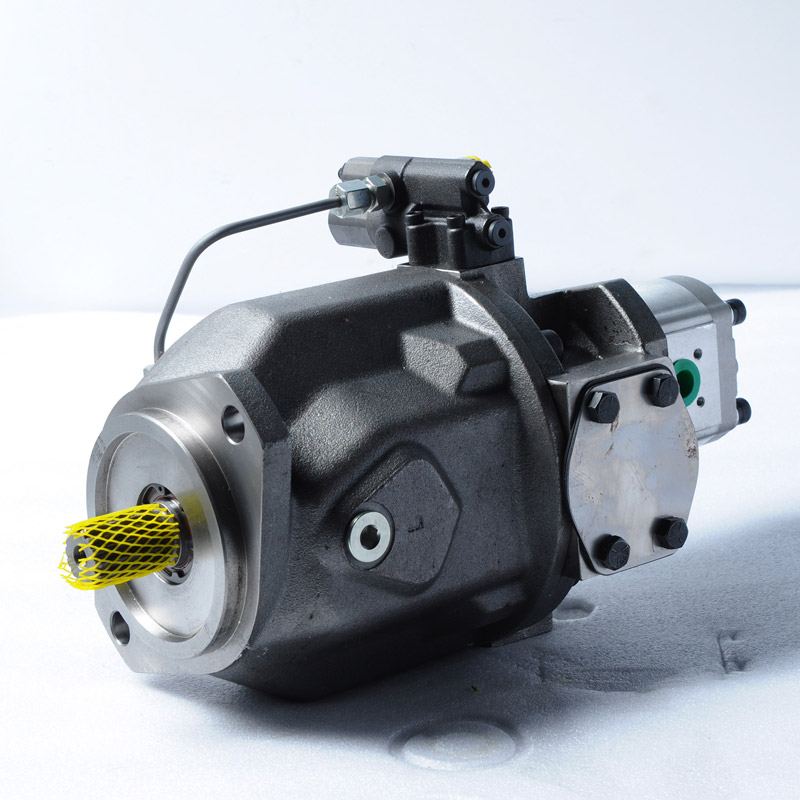
The product side supports the compliance side directly: the LA10V31 piston pump and the LA10VSO32 piston pump carry the test data buyers cross-reference for each mark, while the broader piston pump category page documents the full A4VSO, A10VSO31, A10VSO32, A10VO52/53, and A2F families. Where the buyer-side application is industrial machinery, marine, or engineering machinery, the industrial machinery, marine machinery, and engineering machinery application pages anchor each mark to the use case.
The company-side facts: Vicks Hydraulic is a national high-tech enterprise with eighteen years of hydraulic technology expertise, the producer of 200,000 hydraulic pumps and over 15,000 energy-saving servo systems per year, parented under Ningbo Vicks Hydraulic / BAOSI listed company (Stock Code 300441). These are documented on the about us page and the brand story page, and they underpin the company-side audit record that supports the per-product compliance marks.
Buyer-Side Compliance Checklist Before Issuing the RFQ
Run this list before the RFQ goes out, and again on receipt of the supplier's compliance dossier. Six checks cover the CE / ISO 4406 / CCS triangle without inflating the RFQ into an audit.
1. Confirm the destination market and the installation context (component of a CE-marked machine vs standalone placing on the market). 2. Ask for the Declaration of Conformity naming the harmonised standards with year of publication, and the technical file index. 3. Ask for the factory cleanliness test report per ISO 4406:2021 (or ISO 4406:1999 if the buyer is on legacy specs), and confirm whether the code applies as-shipped or post-break-in. 4. For marine or offshore installation, ask for the CCS type approval certificate number, validity date, and the rated envelope (pressure, speed, fluid). 5. Ask whether ISO 9001 quality management certification is current, and whether the manufacturer is the audited entity (not a parent or trading company). 6. For multi-system RFQs, ask for a single compliance dossier per pump model rather than per shipment, so the same evidence travels with each delivery.
Closing — Compliance Is Engineering, Not Paperwork
The three marks look like paperwork from a distance but they are downstream of engineering decisions. CE forces a risk assessment that picks the right harmonised standard for the pump duty. ISO 4406 forces a cleanliness contract that picks the right filtration and break-in plan. CCS type approval forces a design verification that picks the right bearing, seal, and pressure envelope for marine service. A pump supplier who can talk through the engineering rationale for each mark — not just hand over a PDF — is the supplier worth shortlisting. Vicks Hydraulic's piston pump range, certification dossier, and engineering engagement model are documented across the product centre, applications, and the certificate gallery, and the engineering team can be reached at the contact page with the destination market and duty cycle in hand.
Request a per-market compliance dossier against a specific piston pump model
Vicks Hydraulic responds with the compliance set mapped against your destination markets, not against a generic product list. Tell us the destination country, the installation context (standalone pump or component of a CE-marked machine), and whether the duty cycle is marine, industrial, or engineering machinery, and the engineering team returns the mark set with the test-report citations.
Frequently Asked Questions
No. CE marking under the EU Machinery Regulation 2023/1230 covers the design and construction risks of the pump itself — noise, pressure containment, mechanical hazards, electrical safety where applicable. ISO 4406 cleanliness codes describe the particulate contamination level of the fluid in a working hydraulic system at the time of sampling. They are independent: a CE-marked pump can ship with whatever factory cleanliness level the supplier targets, and the system integrator is responsible for holding the ISO 4406 code under service conditions. Many RFQs ask for both, but they are different evidence packages and should not be conflated.
No, CCS type approval is a marine classification society mark, not a CE substitute. For the EU single market the legal route is CE marking under the Machinery Regulation or the legacy Machinery Directive. CCS is recognised by Chinese-flagged vessels, some offshore operators in Asian shipyards, and by parallel-mutual-recognition agreements among major classification societies. For an EU end-user installing a pump on a non-marine industrial line, CE is sufficient; for an EU shipyard installing the pump on a CCS-classed vessel, both CE and CCS are typically required.
18/16/13 is the common industrial envelope for servo and proportional hydraulic systems, which includes the close-loop pressure and flow control loops on most injection moulding machines. Tighter codes (16/14/11) appear on high-response servo systems or where the moulding cycle is dominated by very fast actuator movements. Looser codes (20/18/15 or 22/21/18) appear on simpler machines without proportional control. The right code is the one the system designer writes into the machine specification — the pump supplier is asked to confirm the as-shipped cleanliness matches that code, not to recommend the code.
Both editions define the same three-number coding system for particles above 4 µm, 6 µm, and 14 µm size thresholds. The 2021 edition refines the reporting format, clarifies the calibration requirements for automatic particle counters, and aligns with updates to ISO 11171 for particle counter calibration. For RFQ purposes, a buyer on the 1999 edition can still receive a test report in either edition; the codes themselves are comparable across editions. The biggest practical change between editions is the trend toward automatic particle counters and away from manual microscope counting.
Vicks Hydraulic is a recognised piston pump manufacturer in China with the certifications documented on the certificate page, and the piston pump range supports CCS-classed marine and offshore installations. Buyers should request the current CCS type approval certificate number, the validity date, and the rated envelope for the specific model on the RFQ. The certificate travels per model family and per rated envelope; not every model in the catalog is CCS type approved.
Yes, provided the DoC names the model series and the variant logic — for example, the A10VSO31 family across displacement codes DR, DRG, DFR, DFLR. The technical file supporting the DoC must cover each variant in the scope. If a buyer specifies a variant that is outside the DoC scope (for example, an unusual port configuration or a higher-than-rated speed), the supplier either extends the DoC scope or issues a model-specific DoC. The DoC is the legal document the EEA customs and market surveillance authorities will ask for, so model coverage matters.
The starting point is EN ISO 4413 (hydraulic fluid power general rules) and EN ISO 4414 (hydraulic fluid power actuators) for the hydraulic-side hazards. Where the pump has an integral electronic control or a solenoid-operated proportional valve, EN 60204-1 (electrical equipment of machines) and the EMC Directive 2014/30/EU apply. If the pump is supplied as part of a larger machine the harmonised standards for the larger machine apply, and the pump DoC may be folded into the machine DoC.
No. ISO 9001 is a quality management system standard — it certifies that the manufacturer runs a documented, audited quality process. CE marking is a product-level legal route to the EU single market — it requires a Declaration of Conformity, a technical file, and a risk assessment per the Machinery Regulation. A manufacturer can hold ISO 9001 without ever CE-marking a product, and a manufacturer can CE-mark a product without holding ISO 9001, though in practice the ISO 9001 audit supports the technical-file discipline.
The DoC and technical file assembly typically takes two to four weeks once the variant is locked, with the noise test, pressure-pulsation test, and cradle-bearing data drawn from the prototype. If the variant requires a new risk-assessment pass — for example, a higher maximum pressure or a different fluid compatibility — the timeline extends to four to eight weeks. Buyers planning a custom variant should request the compliance documentation timeline alongside the prototype timeline; the two are usually parallel but the documentation gate is the last thing to clear before shipment.
A notified body is a third-party organisation designated by an EU member state to assess certain categories of machinery listed in Annex IV of the Machinery Regulation. Most hydraulic piston pumps do not require notified-body involvement; the manufacturer self-declares via the internal production control route (Module A) per the regulation. Notified-body involvement becomes relevant when the pump is part of a higher-risk assembly (for example, a safety-related control system) or when the pump is integrated into machinery listed in Annex IV. The buyer's compliance check is: does this pump fall under Annex IV? If not, the supplier's self-declared DoC is sufficient.