
TL;DR
- The decision is not OEM versus aftermarket in the abstract; it is whether the supplier can hold original geometric tolerances, hardness profiles, and clean-assembly conditions across repeat production batches.
- Acquisition price is the number most buyers compare; total cost of ownership - acquisition plus expected service life plus unplanned downtime exposure - is the number that actually drives the procurement decision.
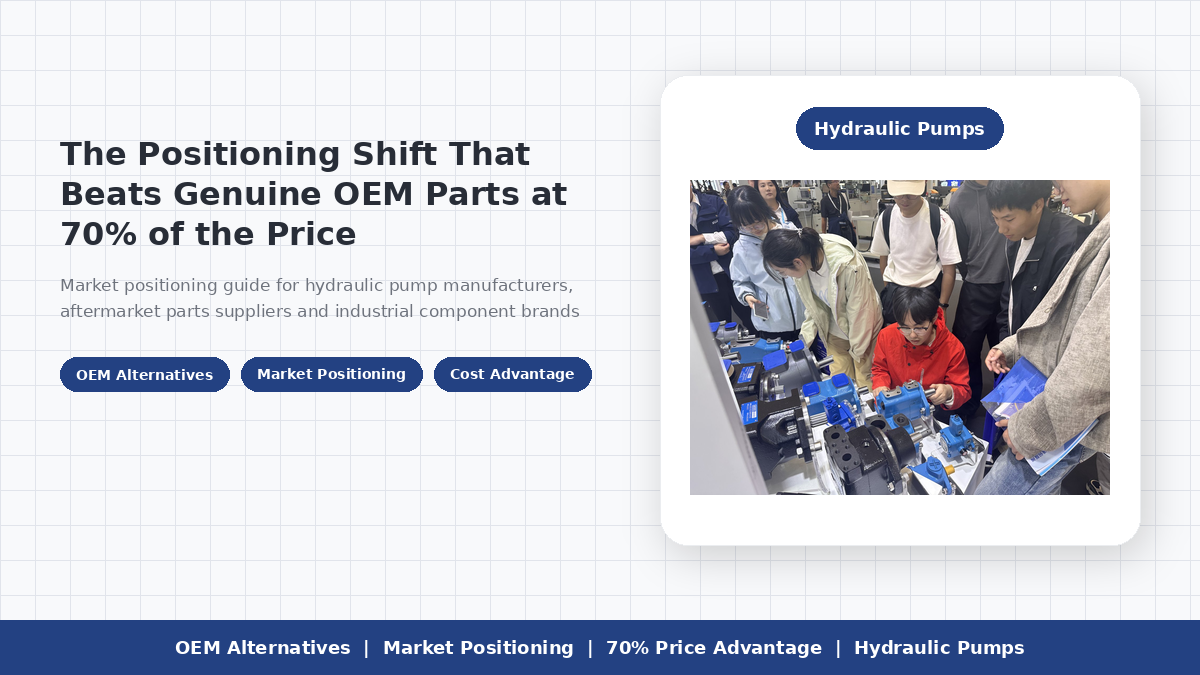
- For warranty-sensitive new equipment, OEM is the conservative default. For mature fleets and continuous-duty production lines, a qualified compatible pump usually wins on TCO once line-stop cost is included.
- Require batch performance tests, material certificates, and hardness records from any replacement supplier, OEM or aftermarket, before the first purchase order.
- Vickshyd has shipped 15,000+ hydraulic pump installations across 40 countries, with 2,000+ of those resolved through field troubleshooting of continuous-duty failures.
The Real Question Buyers Actually Face
When a maintenance engineer types oem vs replacement hydraulic pump cost into a search bar, they usually already know the headline numbers. The OEM cartridge carries a premium. The aftermarket unit is cheaper on the quote. The puzzle is not the gap on the quotation page. The real puzzle is whether the cheaper pump will still be running in eighteen months, or whether it will be the reason the line stopped at 2:14 a.m. on a Saturday.
After three decades of hydraulic system work and more than fifteen thousand pump deployments across forty countries, I have learned that the OEM-versus-compatible question is rarely settled by the line-item price on the purchase order. It is settled by what happens after the pump is installed: how it sounds at full pressure, how clean the fluid stays, how the bearing temperature behaves during a long shift, and how many service tickets it generates over its working life.
This article is the framework I use when a buyer or a maintenance lead asks me to walk through the decision with them. We will look at how the two pump families are actually built, where cost and risk diverge across the duty cycle, and a practical way to choose between them. If you want a single takeaway before we go deeper: the OEM-versus-aftermarket label is a proxy; the supplier's quality system is the actual variable.
How Genuine OEM Pumps and Compatible Alternatives Are Actually Built Differently
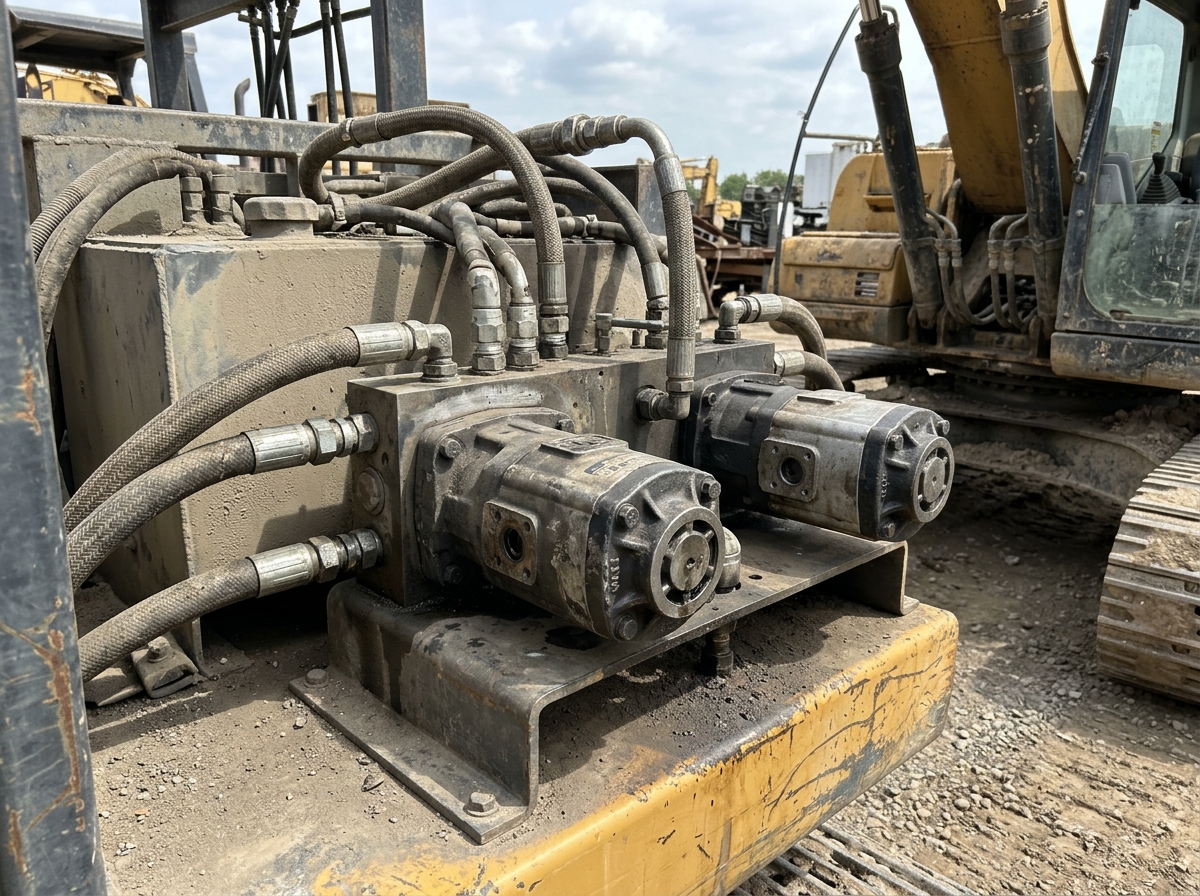
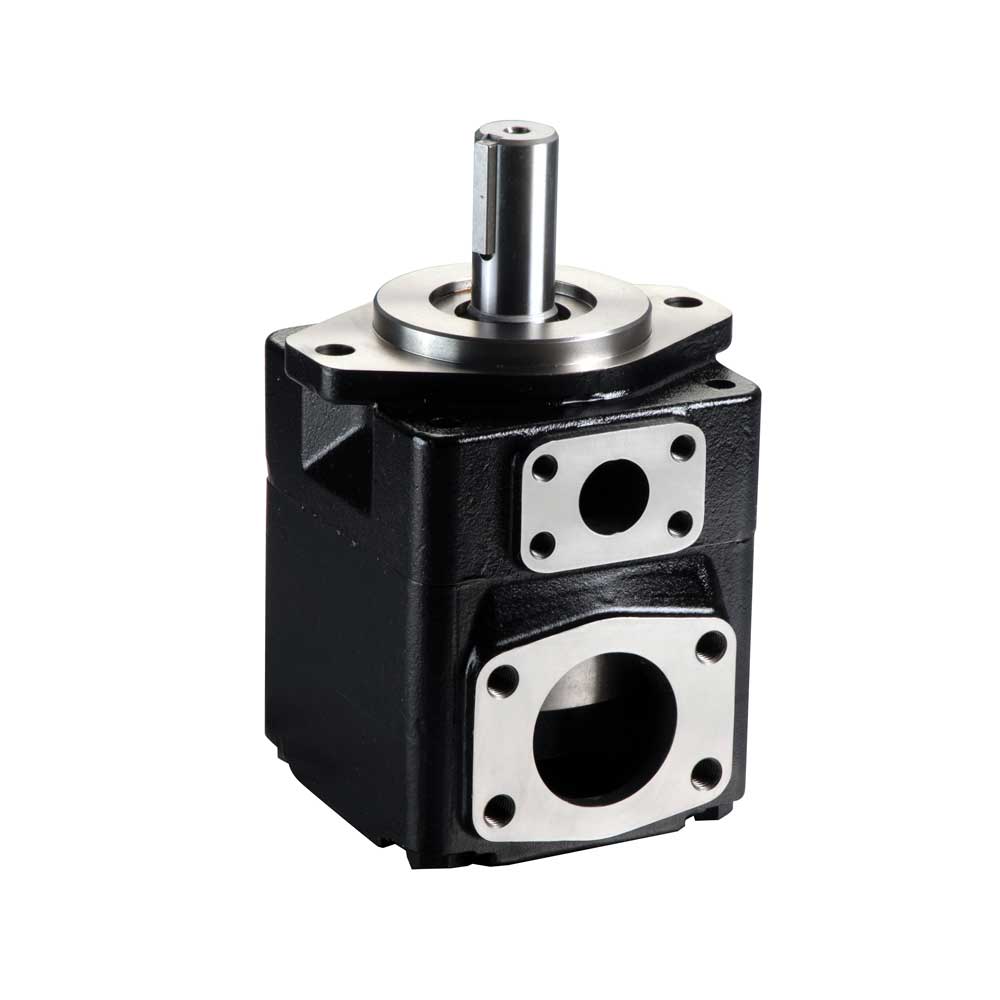
A genuine OEM vane pump, in our context a unit built by Parker Denison for the T6 and T7 series, is the original product of record. The dimensions, the port geometry, the vane tip clearance, and the pressure envelope were established in that manufacturer's engineering files. Service procedures, torque values, and fluid cleanliness targets are published in the OEM service bulletin. Because the OEM owns the design, every replacement unit that ships under the OEM name is held to that same engineering file - which is also why OEM pumps are the conservative default.
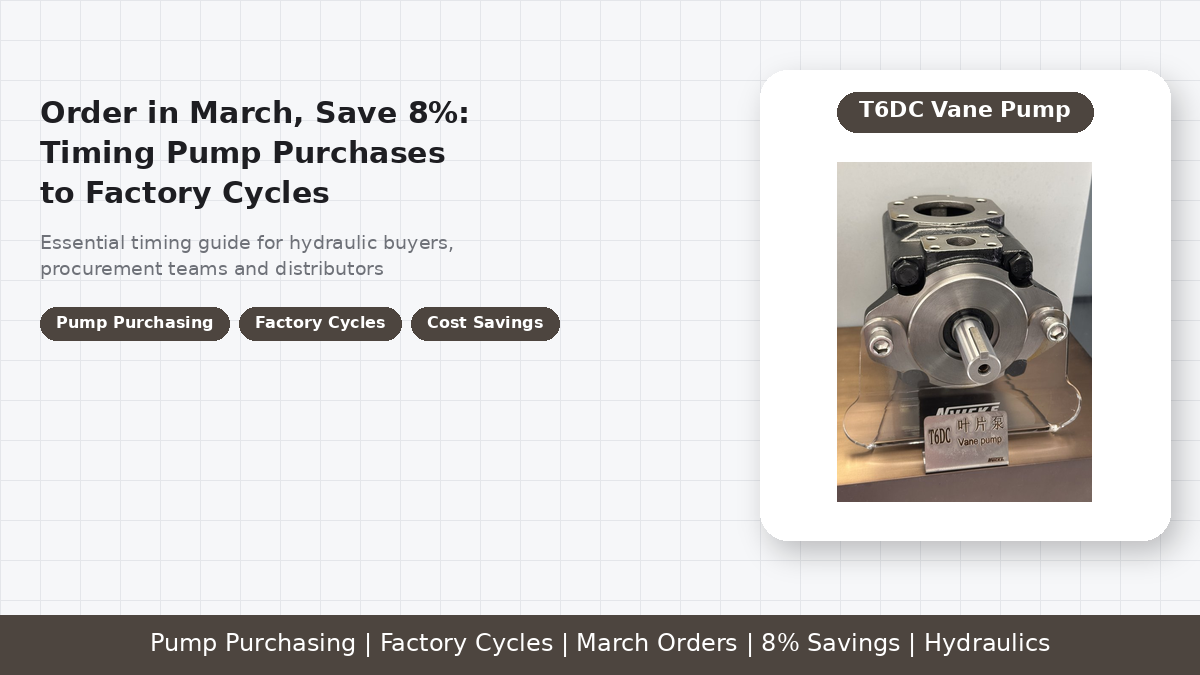
A compatible replacement pump is a different product, made by a different manufacturer, that targets the same fit, the same interface, and the same performance window. The most demanding form of compatible replacement is the direct-replacement unit built to mate with an existing OEM manifold without modification. At Vickshyd, our direct-replacement program covers the T6D and T7B displacements used in industrial presses, plastic injection machines, and heavy mobile equipment - you can review the T6D T7B replacement pump product page for the specification envelope we publish.
Here is the part that buyers often miss. The two pump families can be built on essentially the same machine tools, with the same materials, against the same geometric tolerances, and still produce meaningfully different field outcomes. The reason is not the cutting tool. The reason is the chain of decisions around the cutting tool: which tolerances are measured, which tolerances are accepted, how cleanliness is managed between assembly and packaging, and how each batch is verified before it ships. A pump that is dimensionally correct but assembled in a contaminated cell will fail faster than a pump that is dimensionally looser but built under controlled conditions. Quality is in the system, not the spec sheet.
This is why any honest comparison of OEM versus compatible has to ask about the supplier's quality system before it asks about the pump model. We publish our quality assurance certificates for exactly this reason - so that a buyer can verify the system before they trust the unit.
The Five Dimensions Where Cost and Risk Diverge
When I sit across the table from a maintenance lead and we work through the decision together, we look at five dimensions. Each one shifts the answer in a different direction. A buyer who only looks at one dimension tends to make the wrong call.
1. First-Cycle Acquisition Profile
This is the easiest dimension to compare, because it lives on the quote page. A compatible pump - whether a direct-replacement T6D or T7B unit or a third-party build to Denison-spec - typically lands at a fraction of the OEM cartridge's first-pass price. The acquisition gap is real, and it is the only gap that the aftermarket wins on every time. For buyers operating under tight maintenance budgets, or for procurement teams that have to defend a year-over-year cost-out target, the acquisition gap is what gets the compatible pump onto the short list in the first place.
It is worth pausing here, because the headline price is also where most cost analyses stop. It is also where they go wrong.
2. Operating Performance Over a Continuous-Duty Shift
The first dimension where the answer becomes less obvious is steady-state operating performance. Both pump families target the same rated pressure and displacement envelope, and on a fresh bench both can hit the published curve. What separates them over a real shift is volumetric efficiency drift, noise signature, and heat rejection. A pump that loses two percentage points of volumetric efficiency over a shift is a pump that is forcing the operator to throttle up to hold the cycle, which costs energy and shortens component life elsewhere in the loop.
The way we test this on our own line is with a four-hour continuous-duty run at rated pressure, with inlet temperature held at a controlled setpoint, and with vibration sampled at thirty-minute intervals. Pumps that pass this run are not guaranteed to pass in the field, but pumps that fail this run are very unlikely to last a quarter in a continuous-duty press line. The OEM passes this run as a matter of routine. A qualified compatible manufacturer can pass it too. A non-qualified compatible manufacturer - one that is sourcing components rather than producing them - usually cannot.
3. Reliability and Mean Time Between Unplanned Events
This is the dimension that decides whether the cheaper pump was actually cheaper. In our field ledger, an OEM cartridge in a well-maintained loop will routinely deliver a multi-year service interval before wear crosses the threshold for planned replacement. A qualified compatible unit, when matched to the right duty envelope, can run close to that interval. An unqualified compatible unit can fail inside the warranty window, and when it fails it tends to fail catastrophically - sending contamination through the loop and damaging downstream valves, cylinders, and motors.
The compounding effect is what hurts. A single unplanned line stop is rarely the cost of a single pump; it is the cost of the pump, the cost of the lost production at the line-stop rate, the cost of the emergency service call, and the cost of the contamination cleanup that follows. I have walked into plants where a low-bid pump took out a half-million-dollar machine because nobody had asked the right questions about the supplier's quality system.
This is also why I push buyers toward requiring a batch-level performance test certificate with every shipment. Not a generic datasheet. A certificate that names the batch, the test stand, the test conditions, and the result. ISO publishes the underlying test methodology used for hydraulic pump performance verification, and a supplier willing to certify against that methodology is a supplier you can audit.
4. Service, Documentation, and Aftermarket Support
Documentation is the unglamorous dimension that becomes very important eighteen months after the pump has been installed. The OEM publishes service procedures, torque tables, fluid cleanliness targets, and recommended spare-part kits. A qualified compatible manufacturer publishes the same documentation against the same series specification. A non-qualified supplier publishes a brochure.
When something goes wrong in the field, what unblocks the maintenance team fastest is not the brand on the nameplate; it is whether the service manual on the shelf matches the pump on the machine. If the service manual does not match, every troubleshooting hour is paid for at the line-stop rate, which is why buyers should require matching documentation before the first purchase order, not after the first failure.
SAE J744 establishes the hydraulic motor and pump mounting interface that the Denison T6 and T7 series were designed around. The mounting interface is part of why the direct-replacement approach works at all - and it is the reference point any competent service team will use when they pull a pump for inspection.
5. Inventory and Lead-Time Flexibility
The dimension where a well-run compatible manufacturer can sometimes outperform the OEM channel is lead time. The OEM runs a build-to-order pipeline for many displacements, which means a buyer ordering a non-stocked displacement can wait weeks for a unit that a compatible manufacturer can ship from a rolling inventory of finished goods. For a plant that has just had an unplanned stop, the difference between a one-week lead time and a six-week lead time is the difference between a controlled recovery and an extended outage.
The qualification here matters. Lead time only helps if the pump that arrives on the dock performs to the duty cycle that the failed pump was performing. A fast-ship pump that fails in service is a slower recovery, because the failure has now been compounded by the cost of the failed unit. This is why we hold finished inventory on the T6D and T7B displacements we know are common in continuous-duty service, and why we run every batch through a continuous-duty test before it leaves the dock.
When the OEM Path Earns Its Premium (And When It Doesn't)
The OEM path is the right choice in three situations, and I will name them honestly.
First, the equipment is still inside the original builder warranty. Most OEM warranty terms allow the builder to dispute a claim if a third-party component was installed in the affected subsystem. Even where the legal position ultimately favors the equipment owner, the dispute itself costs time and money. For a brand-new press line, the OEM pump is the path of least resistance.
Second, the application envelope is at the edge of the pump's rated performance. When the machine is operating at or near the upper bound of the pump's pressure, speed, or temperature envelope, the OEM's conservative design margin is part of what you are paying for. Pushing a compatible unit into the same edge-of-envelope service without the OEM's design margin is how failures start.
Third, the failure mode of the application is safety-critical. For systems where a pump failure cascades into a safety hazard - certain presses, certain elevator hydraulics, certain marine steering systems - the OEM path is the right engineering choice. Saving money on a hydraulic pump that, if it fails, endangers people, is not the place to optimize.
Outside those three situations, the qualified compatible path usually wins on TCO. The reason is the line-stop rate. Once you price a continuous-duty production line at its actual line-stop rate, an OEM pump that lasts four years and a compatible pump that lasts three and a half years produce nearly identical TCO numbers - but the compatible pump produced a lower acquisition cost in year zero, which is the year the budget is being defended. That is a useful procurement outcome, and it is the honest framing of the decision.
A Practical Decision Framework for Buyers and Engineers
The framework I use with my own customers is a five-step filter. Walk through it before the next pump order, regardless of which way you are leaning today.
- Is the equipment under original builder warranty? If yes, default to OEM. If no, continue.
- Is the application at the upper edge of the pump's rated envelope? If yes, default to OEM. If no, continue.
- Is the application safety-critical? If yes, default to OEM. If no, continue.
- Has the aftermarket supplier published a batch performance test certificate, a material certificate, and a valid ISO 9001 scope for hydraulic pump manufacturing? If yes, the qualified compatible path is in scope. If no, walk away from that supplier regardless of how attractive the quote looks.
- Price the TCO at your real line-stop rate. Acquisition cost, expected service life, planned service hours, unplanned downtime exposure. The number that emerges from this calculation is the number that should drive the purchase order.
Five steps. Five minutes at the desk. The framework saves more bad decisions than any brand-name loyalty program ever will.
How Vickshyd Approaches the Compatible Replacement Question
We sit on the manufacturing side of this decision, not the OEM side, and that is worth saying out loud. Our view of the OEM-versus-compatible question is not neutral in the abstract, but it is informed by more than fifteen thousand installations in forty countries and more than two thousand field troubleshooting cases. We know what a good compatible pump looks like because we have watched both kinds of pump fail in the field, and we know the difference is the system, not the label.
Our engineering approach to a T6D or T7B replacement is to publish the same specification envelope that the OEM publishes, to manufacture on the same machine tool class, to require batch-level performance tests, and to ship against documented hardness records. We hold finished inventory on the common displacements because we know lead time is part of the value we deliver. We publish our quality assurance certificates in full so that buyers can verify our system before they trust our pumps.
That does not mean a Vickshyd pump is the right answer for every application. If you are commissioning a new line under builder warranty, our recommendation is to use the OEM cartridge for the warranty period and to plan the compatible swap at the first scheduled overhaul. If you are running a continuous-duty plastic injection cell where the OEM lead time has cost you production hours, that is the kind of application where we want to be in the conversation.
The honest summary is this. The OEM-versus-compatible decision is not a brand decision; it is a quality-system decision. Once you have evaluated the quality system, the rest of the analysis is arithmetic.
Need a T6 or T7 Replacement Pump on a Tight Lead Time?
We hold finished inventory on the common T6D and T7B displacements and ship against batch performance test certificates. Send us your model code, duty envelope, and target lead time, and we will respond with a quotation and a documented test record.
Request a QuotationFrequently Asked Questions
Is a compatible replacement hydraulic pump as reliable as an OEM pump?
A compatible pump can be as reliable as an OEM pump when the manufacturer follows the original geometric tolerances, hardness profile, and material specification. The relevant reliability variable is not the label on the carton; it is whether the supplier's quality system can hold tight clearances, validated hardness, and clean assembly conditions across repeat production batches. Verified suppliers publish ISO 9001 audits, batch hardness test records, and a documented performance test report for every pump shipped.
How do I compare the real cost of an OEM pump versus a compatible replacement?
First-pass acquisition cost is the number most buyers compare, but the cost that actually drives the procurement decision is the total cost of ownership over the duty cycle of the application. TCO includes acquisition, expected service life, planned maintenance hours, unplanned downtime exposure, and the value of lost production during a forced outage. Most B2B hydraulic maintenance teams find that acquisition cost is a small share of TCO once unplanned downtime is priced in at the line-stop rate of the host machine.
Will a compatible replacement pump void my machine warranty?
In most jurisdictions, an OEM cannot void a warranty simply because a third-party component was installed, unless the OEM can prove that the third-party component directly caused the failure. For warranty-sensitive applications such as brand-new press lines still under builder warranty, the OEM path is the conservative default. For machines already out of the original warranty period, the warranty risk is generally not a deciding factor.
How long should a hydraulic vane pump last before replacement?
A well-built single-stage vane pump running on clean fluid, within its rated pressure envelope, and within its recommended viscosity range typically delivers a service life measured in thousands of operating hours before wear reaches the threshold that justifies replacement. Actual service life varies widely with fluid cleanliness, contamination ingress, duty cycle, and operating pressure as a share of rated maximum. The pragmatic replacement trigger is not a calendar date but a measurable loss in volumetric efficiency or an audible change in pump noise and ripple.
What documentation should I require from any replacement pump supplier?
Require a batch-level performance test report, material certificates for the rotating group and housing, hardness records for wear-critical components, and a clear statement of dimensional conformance to the original series specification. Cross-check the supplier's quality assurance scope against their public certificate register before placing the first order, and treat one qualifying run as the baseline for every subsequent reorder.
Can a compatible replacement pump match OEM lead time and logistics?
In our experience running shipments to forty countries, a qualified compatible manufacturer can usually shorten lead time on common T6 and T7 displacements because they hold finished inventory in production flow rather than build-to-order. The key qualification is "qualified" - lead time only helps if the pumps that arrive perform to the same duty cycle as the ones they are replacing.
Closing Thought
If you take one thing from this article, take this: the OEM-versus-compatible debate is the wrong debate. The right debate is whether the supplier in front of you - OEM or aftermarket - can document a quality system that holds across repeat production batches. Everything else is arithmetic.
I have spent thirty years on both sides of this decision. The buyers I have seen succeed are the buyers who run the five-step filter before every purchase order, regardless of what the salesperson tells them. The buyers I have seen struggle are the buyers who let the line-item price be the entire conversation. If you want help running the filter on your next pump order, our engineering team is one message away.